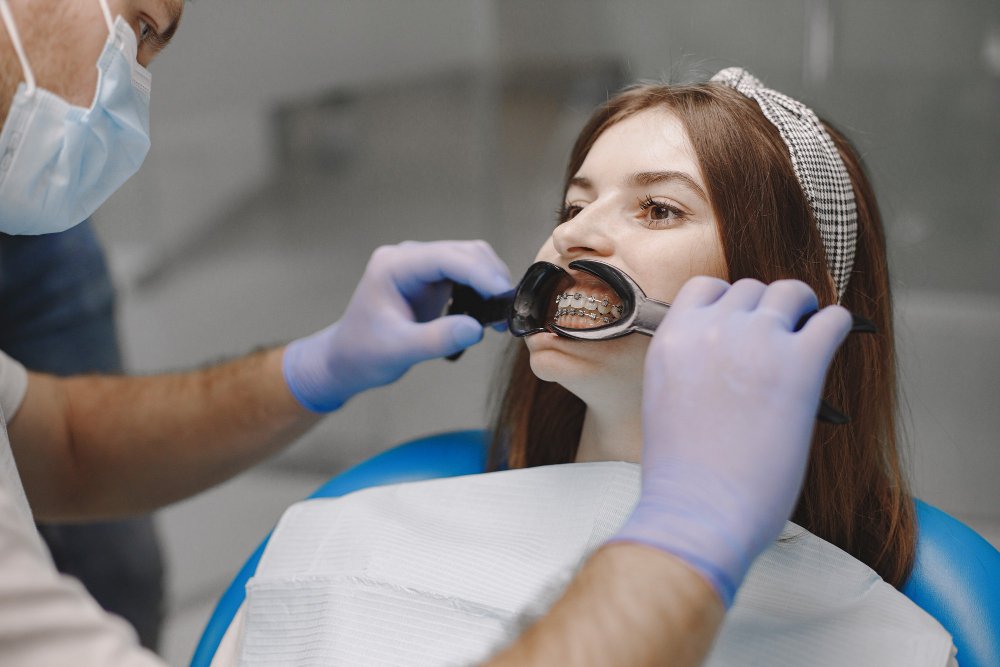
Correct crooked teeth, bite irregularities, and jaw misalignment with modern orthodontic solutions — from traditional braces to nearly-invisible clear aligners, tailored to your dental structure and lifestyle.
01 — Overview
What Is Orthodontic Treatment?
Orthodontic treatment is a specialised branch of dentistry focused on correcting misaligned teeth and jaws. It addresses issues such as crooked teeth, bite irregularities (overbite, underbite, crossbite), spacing, and crowding. The goal is to achieve a functional, symmetrical bite and an aesthetically pleasing smile.
Orthodontics is not only cosmetic — it also improves oral health by making teeth easier to clean and reducing wear caused by improper bites. Treatment can be performed at any age, though it's most commonly started during adolescence. Adults can also benefit greatly thanks to modern options like clear aligners.
A personalised orthodontic plan is designed after detailed evaluation, X-rays, and sometimes 3D scans to determine the most suitable method for your dental structure.
02 — Treatment Types
Orthodontic Treatment Options
There are several types of orthodontic treatments, each tailored to specific needs and preferences. After a clinical examination, your orthodontist will recommend the most suitable option to ensure optimal results with minimal discomfort.
Most Common
Metal Braces
The most widely used and effective option — especially for complex cases involving severe misalignment, overcrowding, or bite issues. Stainless-steel brackets connected with wires and elastics.
Highly durable, effective for all ages
Noticeable appearance, initial discomfort
Aesthetic
Ceramic Braces
Work just like metal braces but made of clear or tooth-coloured materials that blend with natural teeth, making them less visible — ideal for teens and adults concerned about appearance.
Aesthetic advantage, blends naturally
More fragile, may stain without care
Invisible
Lingual Braces
Attached to the back side of the teeth (tongue-facing side), making them invisible from the front. Custom-made for each patient — excellent for patients concerned about aesthetics.
Completely hidden from view
Affects speech initially, higher cost
Most Popular
Clear Aligners
Removable plastic trays (such as Invisalign) that gradually move teeth into position. Popular among adults and teens for their transparency and convenience — new set every 1–2 weeks.
Nearly invisible, removable for eating
Best for mild–moderate cases; 20–22h/day
Efficient
Self-Ligating Braces
Look similar to traditional braces but use special clips instead of elastic bands to hold the wire — less friction, potentially shorter treatment time, easier to keep clean.
Fewer appointments, more comfortable
Still visible (unless ceramic)
Post-Treatment
Retainers
After active treatment, retainers prevent teeth from shifting back to their original positions. Available as fixed (bonded behind teeth) or removable (acrylic and wire, or clear plastic).
Preserves your results long-term
Essential for preventing relapse
03 — Benefits
Benefits of Orthodontic Treatment
Orthodontic treatments offer both health and aesthetic benefits — it's not just about a straighter smile, but better long-term oral and general health.
01
Improved Bite Function
Ensures proper chewing and digestion — preventing wear and protecting your teeth long-term.
02
Enhanced Smile Aesthetics
Boosts self-confidence and creates better facial harmony and symmetry.
03
Easier Oral Hygiene
Aligned teeth are simpler to clean, reducing cavities and gum disease over time.
04
Speech Improvement
Corrects pronunciation issues caused by misaligned teeth and bite problems.
05
Jaw Health
Reduces strain on the jaw and prevents TMJ disorders and associated headaches.
06
Long-Term Stability
Prevents future tooth movement and decay issues caused by overcrowding.
04 — The Process
Stages of Orthodontic Treatment
Orthodontic treatment follows a structured pathway designed to deliver functional balance and aesthetic improvement. Each stage ensures progressive, controlled tooth movement and long-term stability.
Initial ConsultationComprehensive dental evaluation, X-rays, 3D scans, and bite analysis to plan your treatment.
Treatment PlanningA personalised treatment plan is created based on your specific dental needs and preferences.
Appliance PlacementBraces or aligners are carefully fitted — the active phase of treatment begins.
Adjustment AppointmentsRegular visits every 4–8 weeks to monitor progress, change aligners, or adjust wires.
Retention PhaseAfter teeth alignment, a retainer is provided to preserve your results permanently.
05 — Ortho vs Dental
Orthodontist vs General Dentist
General dentistry and orthodontics serve different — but complementary — roles in oral health. Understanding the difference helps you choose the right specialist for your concern.
General Dentist
Focuses on maintaining and restoring overall dental health.
Visit if — you want straight teeth or bite correction
Both professionals play essential roles, and working with both ensures a complete approach to your oral wellness — combining health, function, and aesthetics for a confident smile.
06 — Duration
How Long Does It Take?
The duration of orthodontic treatment varies based on the complexity of your case and the chosen method. On average, treatments last between 12 and 24 months.
Typical timeframes by method:
Clear aligners (mild cases) — 6 to 9 months
Clear aligners (moderate cases) — 12 to 18 months
Self-ligating braces — 12 to 18 months (faster than traditional)
Metal or ceramic braces — 18 to 24 months for standard cases
Complex cases (severe misalignment) — 24+ months
Regular follow-up visits and adherence to your orthodontist's instructions help ensure efficient progress. Consistency and oral hygiene also play a key role in shortening treatment time and avoiding complications.
07 — Pricing
Cost of Orthodontic Treatment
Orthodontic treatment costs in Antalya depend on the treatment type, duration, and materials used. Compared to countries like the UK or Germany, patients can save up to 60% without compromising quality.
Pricing by treatment type:
Metal Braces — most affordable, widely used option
Ceramic Braces — slightly higher cost due to aesthetics
Clear Aligners — varies depending on the number of trays needed
Lingual Braces — typically the most expensive option (custom-made)
Self-Ligating Braces — moderate to high, depending on material
Our all-inclusive packages cover:
Initial consultation and digital scans
Complete treatment with chosen appliance
All adjustment appointments
Final retainers (fixed or removable)
Hotel accommodation and transfers (for international patients)
Travelling international patients especially benefit from our coordinated treatment plans that fit international schedules.
08 — FAQ
Frequently Asked Questions
Orthodontic treatment not only straightens teeth but also improves bite alignment, making chewing and speaking easier. It also helps prevent long-term dental issues such as enamel wear, jaw pain, and gum disease.
Yes, braces are one of the most common forms of orthodontic treatment designed to gradually align teeth and correct bite issues. They can be made of metal, ceramic, or placed behind the teeth (lingual braces).
Absolutely — retainers are a crucial part of the post-treatment phase to maintain the new position of the teeth. Without retainers, teeth may gradually shift back to their original alignment.
Not entirely — while active treatment ends when braces are removed, wearing retainers is necessary to preserve the results. This retention phase ensures long-term stability and prevents relapse.
Get Started
Ready for a Perfectly Aligned Smile?
Get a free consultation and personalised orthodontic treatment plan from our specialist team in Antalya.