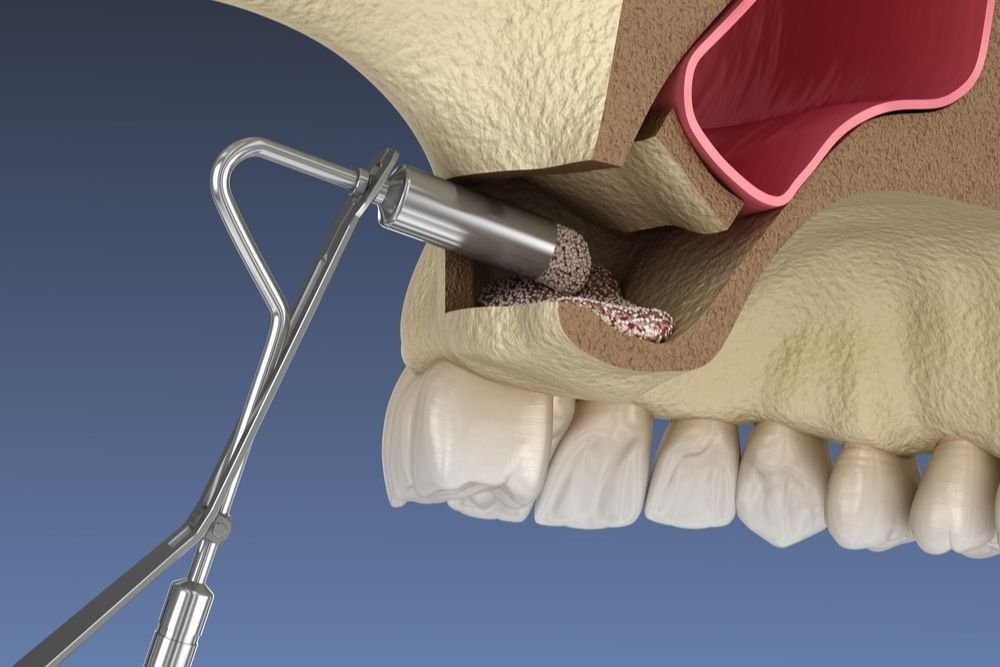
Specialised surgical procedures that rebuild jawbone volume and lift the sinus membrane — creating a solid foundation for successful, long-lasting dental implants, even when bone has been lost or resorbed.
01 — Overview
What Is Sinus Lift & Bone Grafting?
Sinus lifting and bone grafting are surgical procedures commonly used in preparation for dental implants — especially in the upper jaw. When teeth have been missing for a long time, the bone in that area begins to shrink or resorb, and the sinus cavity can expand downward, leaving insufficient bone to anchor implants securely.
A sinus lift involves gently lifting the sinus membrane and inserting bone material to increase the height and volume of the bone in the upper jaw. Bone grafting, on the other hand, can be used in any part of the jaw to rebuild lost bone tissue using synthetic materials, donor tissue, or your own bone.
Together, these procedures restore the necessary structure for successful, long-lasting dental implants. Our clinic uses 3D imaging and minimally invasive techniques, ensuring precision, safety, and shorter recovery times.
02 — Why Needed
Why You Might Need It
You may need sinus lifting or bone grafting if you're considering dental implants but lack sufficient jawbone to support them. This is especially common in patients who have had missing upper molars or premolars for many years.
Without enough bone volume, implants may not integrate securely, leading to failure. Bone loss can result from periodontal disease, trauma, or natural resorption over time. These preparatory procedures ensure the implant has a solid foundation, increasing long-term success and function.
You might be a candidate if:
You have less than 4–5 mm of bone height in the upper jaw
Your sinus cavity has expanded into the implant area
Bone loss has occurred after tooth extractions
You've been told you don't have enough bone for implants
Existing implants are failing due to insufficient bone support
By restoring proper bone height and density, sinus lifting and grafting open the door to a permanent and stable tooth replacement solution.
03 — Sinus Lift Types
Two Sinus Lifting Approaches
There are two main types of sinus lifting procedures, each tailored to the amount of existing bone and the complexity of the case. Your dentist will evaluate the area using digital X-rays or CBCT scans to determine the most suitable approach — advanced planning ensures minimal trauma and faster healing.
Lateral Window Lift
The traditional approach — used when there is minimal bone height available.
Used when — bone height is severely deficient
Technique — small window created on the side of the upper jaw
Implants — placed after 4–6 month healing period
Best for — significant bone loss cases
Transcrestal (Closed) Lift
Less invasive method — performed directly through the planned implant site.
Used when — slightly more residual bone available
Technique — accessed through the implant site itself
Implants — can sometimes be placed simultaneously
Best for — moderate bone height with simpler anatomy
04 — Graft Materials
Types of Bone Graft Materials
Bone grafting adds volume and density to your jawbone where it has been lost. Several types of grafts are used depending on your case, anatomy, and clinical needs. Over the next few months, the graft fuses with the natural bone through a process called osseointegration, creating a stable platform for future dental implants.
Your Own Bone
Autograft
Bone harvested from your own body (e.g. chin or hip) — gold standard for compatibility and healing.
Donor Bone
Allograft
Donor bone processed for safety and sterility — no second surgical site needed on the patient.
Animal Source
Xenograft
Bone from animal sources (typically bovine) — excellent scaffold for new bone growth.
Synthetic
Alloplast
Synthetic bone-like materials — biocompatible alternative with consistent quality and supply.
The procedure begins with numbing the area and exposing the bone. The grafting material is carefully placed into the site and secured with a membrane if needed. We use state-of-the-art techniques and biologic materials to accelerate healing and improve success rates.
05 — The Process
Stages of the Procedure
A sinus lift and bone graft procedure generally follows a well-defined series of stages to ensure safety, predictability, and long-term success. Each stage is meticulously planned and performed to reduce discomfort and enhance results.
Initial Consultation3D imaging (CBCT) and clinical examination assess bone height, sinus anatomy, and implant planning.
Surgical PlanningThe surgeon determines the appropriate lifting technique and graft material based on your specific anatomy.
Procedure DayUnder local anaesthesia or sedation, the gum is opened, the sinus membrane gently lifted, and bone graft material is placed.
Healing PhaseIt takes around 4–6 months for the graft to integrate with the natural bone through osseointegration.
Implant PlacementImplants are placed either simultaneously (in select cases) or after healing is fully complete.
06 — Recovery
Recovery & Aftercare
Recovery time depends on the type of sinus lift and bone grafting performed. In general, initial healing takes 1–2 weeks (with mild swelling and discomfort), while full bone integration takes 4–6 months — at which point the new bone is strong enough to support implants. Most patients return to normal activities within a few days.
First Two Weeks
Avoid blowing your nose or sneezing forcefully
Take prescribed antibiotics and pain relief
Eat soft, lukewarm foods only
Apply cold compresses to reduce swelling
Sleep with head slightly elevated
Long-Term Healing
Avoid smoking — it significantly delays healing
Maintain excellent oral hygiene
Attend all scheduled follow-up appointments
Don't strain or lift heavy objects for 1 week
Wait the full 4–6 months before implant placement
When to Contact Your Surgeon
If you experience severe or worsening pain, persistent bleeding, fever, or significant swelling beyond the first few days, contact us immediately. Smoking, poor oral hygiene, and ignoring aftercare instructions can delay healing or cause complications — early intervention is key to preventing problems.
07 — Pricing
Cost of Sinus Lift & Bone Graft
The cost varies depending on the complexity of the case, the type of graft material used, and whether implants are placed simultaneously. However, prices in Antalya are significantly more affordable compared to Western Europe or the UK — patients can save up to 60% on the same procedures abroad.
Pricing factors:
Type of sinus lift (lateral window vs transcrestal)
Amount and source of bone graft material
Number of grafted areas
Need for additional procedures (membrane placement, implant insertion)
Whether the procedure is part of a wider implant package
Our all-inclusive packages cover:
Initial consultation and 3D CBCT imaging
Complete sinus lift and/or bone graft procedure
All graft materials and membranes
Hotel accommodation and airport transfers
All follow-up appointments and post-op care
Antalya is a top destination for advanced dental treatments at competitive prices — without compromising on technology, safety, or surgeon expertise.
08 — FAQ
Frequently Asked Questions
A sinus lift is a surgical procedure that adds bone to the upper jaw in the area of molars and premolars. It's often necessary when there isn't enough natural bone height in the upper jaw, or the sinuses are too close to the jaw, to securely place dental implants.
The procedure is performed under local anaesthesia or sedation, so you won't feel pain during the surgery. Some swelling and mild discomfort may occur afterward, but it is usually manageable with over-the-counter or prescribed pain medication.
Healing time can vary depending on the amount of bone added, but it typically takes 4 to 9 months for the grafted bone to integrate properly and be ready for implant placement. Initial soft tissue healing happens within 1–2 weeks.
As with any surgical procedure, there are potential risks such as infection, sinus membrane perforation, or graft failure. However, these complications are rare — especially when the procedure is performed by an experienced dental surgeon using modern imaging and minimally invasive techniques.
Get Started
Build the Foundation for Your New Smile
Get a free consultation and personalised treatment plan from our specialist team in Antalya.